01 · A named conference
The record should refer to a specific conference or edition. A badge on one page should not silently stand for every event an organiser runs.
A useful conference badge gives researchers a route to inspect its context. ScholarVault’s badge experience connects the visible mark with the conference record and its supporting evidence.
Conference identity · Assessment scope · Sources · Record date · Current status.
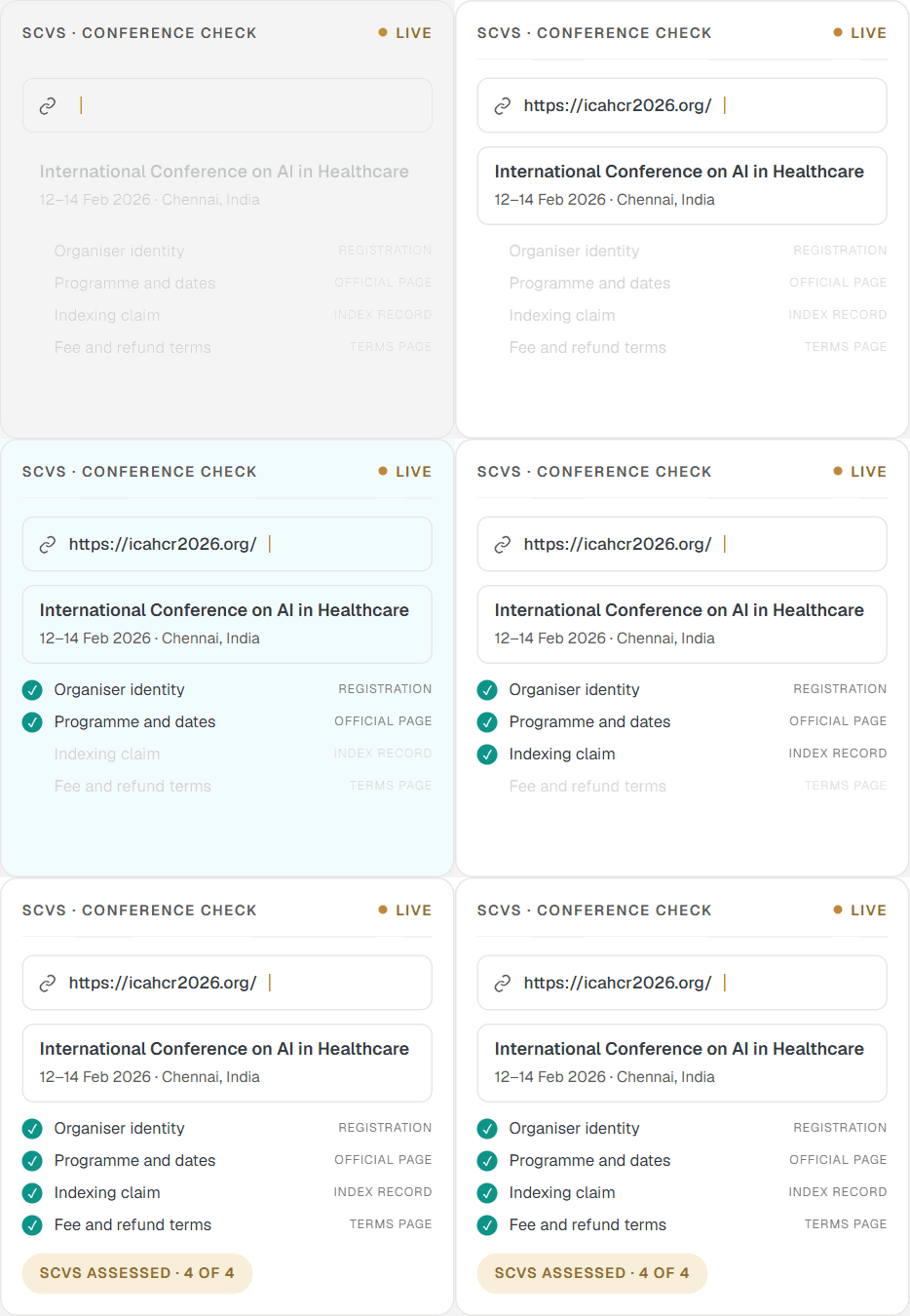
Researchers should be able to find out what a mark means, where it came from and what its underlying record contains.
The record should refer to a specific conference or edition. A badge on one page should not silently stand for every event an organiser runs.
Assessment information, sources and dates help explain what was reviewed. The badge should provide a path to those details.
A visitor needs a working record link—not a screenshot that cannot be checked. Status and validity should be read from that record.
Help researchers inspect the conference record. Badge eligibility and issue conditions depend on the applicable assessment and review process.
Provide the official edition page, organiser details and the programme that researchers will investigate.
Read the assessment scope and sources. Resolve missing or conflicting information through the appropriate review workflow.
Check the applicable issue conditions with ScholarVault. A paid request or attractive website alone does not create eligibility.
When a badge is issued, use its provided embed and verification destination. Keep the public page tied to the correct edition.
Researchers should be able to inspect the current status rather than rely on an old image.
These examples show how an issued badge could sit beside useful conference information. They are illustrative and contain no live badge code.
Put the evidence near the participation decision. A sample page reads: Sample Research Forum — Programme · Registration · Conference evidence, with a link to inspect the conference record.
A readable route back to the record. Sample Academic Programme — Research · Exchange · Collaboration. Use the issued reference and full verification URL in print. A QR code needs a real record destination.
Use the code supplied with issuance. Replace the placeholder only with the actual issued destination. This example is not a verified badge.
<a href="ISSUED_VERIFICATION_URL">
  Inspect this conference record
</a>A conference assessment badge describes an event record. An issued participant credential describes an eligible person’s activity in a supported edition.
Inspect the event, edition, assessment scope and available source evidence. It is not a promise of publication, indexing or acceptance.
Inspect the individual credential reference, conference and issuance context. Participation records and personal documents do not automatically become credentials.
Share your official conference page and the badge context you need. The team can establish the applicable process.
Explore the distinctions behind the mark.
A request or payment does not itself establish assessment eligibility. Follow the applicable evidence review and issuance process.
No. Publication and indexing depend on the venue, publisher and relevant indexing body. Read original sources before committing.
The specimen is an illustration. Use only the actual badge and record supplied for your eligible conference edition.
Follow the verification destination attached to the issued badge or credential. Check the reference and edition match your event.
Share your official conference page and the badge context you need. The team can establish the applicable process.

It opens in its own window — no browser tabs, no address bar.
Your browser's install dialog appears on the next screen — that is the one that installs the app.